
Menu
The dry spell isn't the problem. What you've decided it means about you — that's the part worth examining.
Let me tell you what I hear most often from people who come to me after a long gap in their intimate lives. Not the practical concern — how do I get back to it, what do I do first. The practical concern comes later. What I hear first, almost without exception, is this:
“I don’t know what happened to me.”
Sometimes they mean physiologically. Sometimes they mean emotionally. Most of the time they mean both, tangled together in a way that feels impossible to separate. What they’re really saying is: I used to feel like a sexual person and now I don’t, and I’m not sure I remember how to get back there.
That experience — the disconnection, the uncertainty, the quiet shame of feeling like you’ve lost something you can’t quite name — is one of the most common things I work with. And it’s almost never about sex.
A dry spell is a symptom. The confidence that went quiet around it is the thing worth rebuilding — and it has very little to do with how much sex you’re having.
The phrase itself is part of the problem. “Dry spell” implies a temporary weather pattern — something that happened to you, that you’re waiting to end. It frames the experience as passive, which makes the solution feel equally passive. Just wait for it to rain.
What’s actually happened, in almost every case I’ve encountered, is that something specific interrupted the connection between you and your own desire. Stress. Illness. Relationship distance. A breakup. A major life change. Your body and mind, very sensibly, redirected their resources elsewhere.
That’s not a failure of your sexuality. It’s your system responding appropriately to its circumstances. The question isn’t what’s wrong with you. The question is: what happened, and what does getting back feel like from here?
Different causes require different approaches. Here’s what I see most frequently, what each one does to confidence specifically, and the first move that actually helps.
|
What caused the spell |
What it does to confidence |
The first move back |
|
Stress or burnout |
Desire goes quiet. You don’t miss it because your nervous system is in survival mode. Then the silence becomes its own source of anxiety. |
Address the stress first, not the sex. Intimacy cannot be rebuilt on an exhausted foundation. |
|
Illness or physical change |
Body trust breaks down. You feel disconnected from yourself, uncertain of what you’re capable of, hyperaware of what’s changed. |
Reestablish a relationship with your own body before bringing someone else into it. Start with touch that has no destination. |
|
Relationship conflict or distance |
Emotional safety erodes. Sex requires vulnerability, and vulnerability requires feeling safe. Without safety, desire shuts down as self-protection. |
The intimacy repair starts outside the bedroom. Reconnect emotionally before expecting physical connection to follow. |
|
Coming out of a breakup |
Identity disruption. You’re no longer sure who you are as a sexual person outside of that relationship — what you want, what you like, what you’re worth. |
Rebuild desire as a solo experience before re-introducing another person. Desire is yours, not a function of who wants you. |
Here’s the thing about sexual confidence that most advice skips: it’s not primarily about technique, or attractiveness, or experience. It’s about permission. Whether you feel permitted to want, to ask for what you want, to take up space in the experience.
A dry spell — whatever caused it — almost always chips away at that permission. Not dramatically. Quietly. You start monitoring yourself. Wondering if you’re doing it right, if you seem into it, if your body is responding the way it should. This mental observer — what sex therapists call spectatoring — is the single most reliable way to kill pleasure, and it shows up reliably after any significant gap.
Naming it, just to yourself, is the first step to interrupting it. You’re not failing at the experience. You’re watching yourself have it instead of having it. Those are different problems with different solutions.
You don’t rebuild sexual confidence by having more sex. You rebuild it by removing the conditions that made it go quiet in the first place.
These aren’t tips. They’re a sequence. The order matters because each step makes the next one possible. Skipping ahead usually means going back.
You cannot rebuild what you won’t look at. This doesn’t require a deep psychological excavation. Just a clear, honest sentence: ‘I haven’t felt like myself sexually since X.’ That sentence is the starting point, not the destination.
Dry spells generate narratives: I’ve lost it. I’m not attractive anymore. This is just what happens at my age. These stories feel like facts but they’re not. They’re interpretations. Notice them, and notice that you built them, which means you can revise them.
The instinct after a long dry spell is to overcompensate — to go from zero to a fully intimate encounter and prove to yourself that you’re fine. This usually backfires. Start with touch that has no performance attached. Closeness without expectation. Let the pressure come down before the stakes go up.
Silence makes everything bigger. If you’re with a partner, naming the vulnerability (‘I’ve been in my head about this’) almost always reduces the pressure more than any amount of trying to power through it. If you’re solo, writing it down achieves the same thing. Externalize it and it loses some of its authority.
A dry spell often ends not with a grand return to form but with a series of smaller moments that gradually rebuild the path. Let those count. Let a moment of genuine desire count, even if it doesn’t lead anywhere. Let closeness count. Let a good conversation count. You’re not rebuilding a performance. You’re rebuilding a feeling.
Patience doesn’t mean passive. If three months pass and nothing has shifted, that’s information worth acting on — with a therapist, a doctor, or an honest conversation with yourself about what’s actually going on. Waiting without a check-in point is not patience, it’s avoidance with a softer name.
If you’re both in this — navigating a period of distance and trying to find your way back — the most useful thing I can tell you is this: the partner who is not in the dry spell has a job too, and it isn’t to wait patiently and not mention it.
The job is to make the reconnection feel genuinely low-stakes. Not “no pressure” said with an expression that communicates pressure. Actually low-stakes — where closeness is welcome and nothing is required of it, and where the conversation about how you’re both feeling happens outside the bedroom, with clothes on, at a moment nobody is already anxious.
Some couples find it easier to let a deck do the asking. Sexy card games with levels, like Spice It Up, let you start on Mild and only turn it up when you both want to.
The rebuilding happens faster when both people are actively creating safety, not just one person trying to perform their way back to confidence while the other watches to see if it’s working.
Go slowly. Go together. Let small things count.
Write down — for your eyes only — the honest answer to this: what would need to be different for you to feel safe enough to want again? Not what would need to be different about your body, or your partner, or the circumstances. What would need to be different about how safe you feel. Start there.
In this issue

Most skincare routines stop at the neck. Here’s a simple body care routine, under five minutes a day, plus a weekly ritual...
Read the story →
Worried about how you look, how long it’s taking, or whether you’re “doing it right”? Here’s how to stop performing and start...
Read the story →
Conflict isn’t the problem. Unrepaired conflict is. Psychoanalyst Jordan Dann shares five techniques to help couples fight better and repair faster.
Read the story →
When your partner is running on empty, it’s easy to end up on empty too. Here’s how to help them recharge while...
Read the story →
Ovulation apps, test days, and sex with a calendar invite: trying for a baby can test any couple. Here’s how to keep...
Read the story →
New habits, new goals, new you… and a partner who feels a step behind. Honest, friendly advice for couples when one of...
Read the story →
From $100K in debt to financial freedom in their early 30s, Ali and Josh Lupo of The FI Couple share how they...
Read the story →
Is that knot in your stomach a red flag or just your overthinking brain? A few simple tells, a quick quiz, and...
Read the story →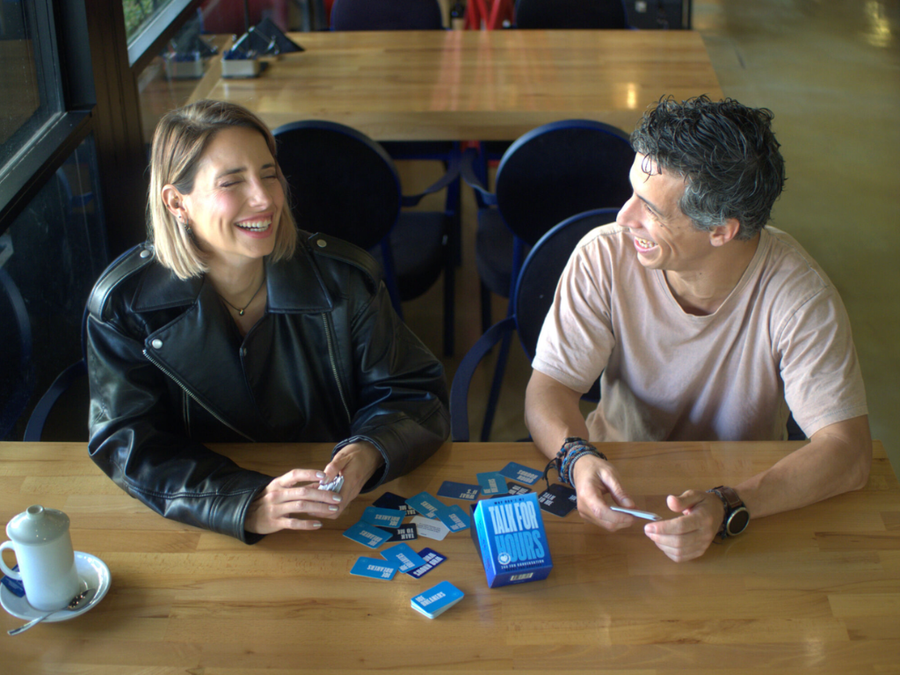
No phones, no plans, no agenda. The Decompression Date is the easiest (and most underrated) date you’ll take this year, and exactly...
Read the story →
Skip the outfits that only work in photos. From Sunday brunch to a night in, here are his and hers style picks...
Read the story →
In Spain, a good life isn’t measured in money or luxury, but in time: long lunches, siestas, and evening strolls. Welcome to...
Read the story →Your cart is currently empty.